Bug sweeps
How a bug sweep works
What we do in an office, a car or a flat, which instruments we use and why it takes hours.
5 min read
TSCM, technical surveillance countermeasures, is the search for planted devices: microphones, cameras, GPS trackers, transmitters. Cheap "bug detectors" from marketplaces do not work here: modern bugs stay silent until activated, or transmit in short bursts over Wi-Fi and mobile networks.
Stages of the sweep
- A conversation before the visit: who might be listening and why, which rooms are critical, when we can work without witnesses.
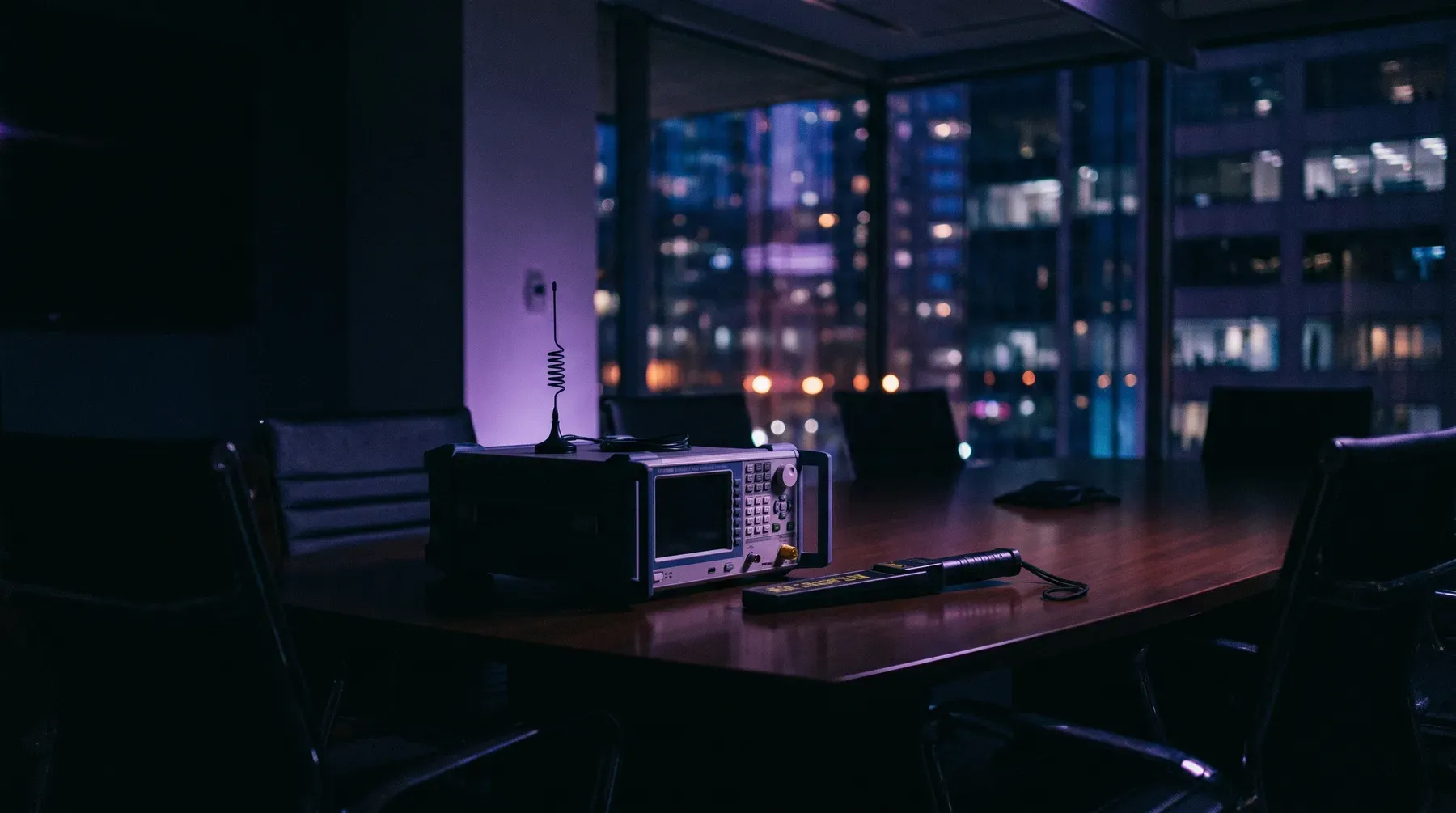
- Radio frequency analysis: a spectrum analyser records every transmission in the room and compares it with the baseline for the area.
- Non-linear junction detector: finds electronics even when switched off or without a battery, in walls, furniture, gifts.
- Physical inspection: sockets, lights, ceiling, equipment, ventilation, the car by checkpoints.
- Wired lines and the network: telephony, Ethernet, Wi-Fi devices that should not be on the network.
- Thermal imaging and optics for hidden cameras.
What you get
A report with results for each room, devices found (with photos and location), recommendations on how to prevent a repeat and, if needed, a protocol for lawyers.
How long it takes
An office and a meeting room: a few hours. A whole floor: a working day. A car: one to two hours. More precisely after the conversation.
Articles
Signs that you may be listened to
None of them is proof, but two or three together are a reason to check.
3 min read
What a pentest is and how it differs from a vulnerability scanner
A scanner finds known holes from a list. A pentester thinks like an attacker and chains small things into a real breach.
4 min read